Our Commitment to Diversity, Equity, Inclusion, and Belonging
The DEIB Committee consists of representatives of earthday365 staff, Board of Directors, and Young Friends. The Committee members work to develop an anti-racist culture within the organization and take a leadership and advisory role in ensuring that the organizational structures, activities, and community interactions of earthday365 support Environmental Justice for all communities impacted by intersecting forms of oppression.
Motivations Behind Our Work
We recognize the harmful impact of Environmental Injustice, particularly on historically marginalized communities such as Indigenous peoples, Black, Brown, and low-income populations, who disproportionately bear the brunt of Environmental Racism and other forms of systemic oppression. We affirm that the environmental movement, including organizations like earthday365, must actively engage in dismantling these inequities as part of a holistic approach to climate action.
earthday365’s role is crucial, as a white-led environmental organization, in prioritizing addressing Environmental Injustices, both internally through our Diversity, Equity, Inclusion, & Belonging Committee (DEIB), and externally through our work and programming. We partner with communities impacted by illegal dumping and food apartheid/insecurity through our Environmental Justice Days of Action.
The work always continues. As we move forward, we collaborate with BIPOC led organizations to listen to the needs shared so we can best assist their leadership and actively learn where we can improve our approach and impact.
Reflection & Growth Process
-
- DEIB Committee that meets monthly
- Subcommittees for specialized work
- Review meetings with partner organizations following events
- Internal & External reporting
- DEIB Committee that meets monthly
Strategic Plan
-
- Equity – We seek to identify, understand, and address the most pressing environmental justice issues within the St. Louis region, and to work towards a future in which environmental and health outcomes are not tied to race and income. Learn more.
Accessibility
-
-
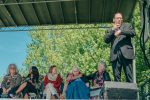
ASL Interpretation provided at the Earth Day Festival main stage.
We strive to consider all individuals and communities when coordinating public events or virtual and online content so all feel welcome and included.
-
Methods and Approaches
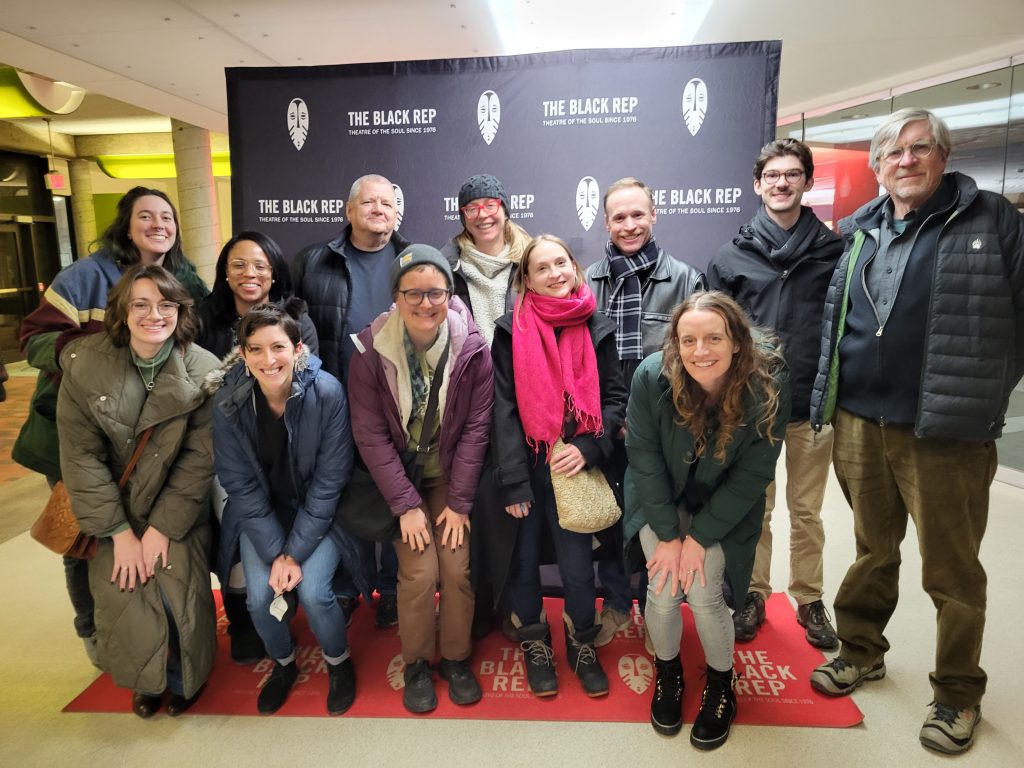
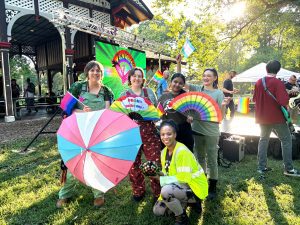
Committee consists of earthday365 staff, board members, and Young Friends who meet on a monthly basis.
-
- Margaret Gerker – Young Friends
- Joyce Gorrell – Board of Directors
- Chey Lovellette – Staff
- Elizabeth Sabetta – Staff
- Jess Watson – Staff
- Aaron Young – Board of Directors
- Subcommittees:
- Beyond Land Acknowledgement
- Temporary Subcommittees for special projects like organizing trainings and policy updates
- Links to our DEIB Committee work
Trainings and Events for 2025
- Chicken and Biscuits at The Black Rep – January 2025
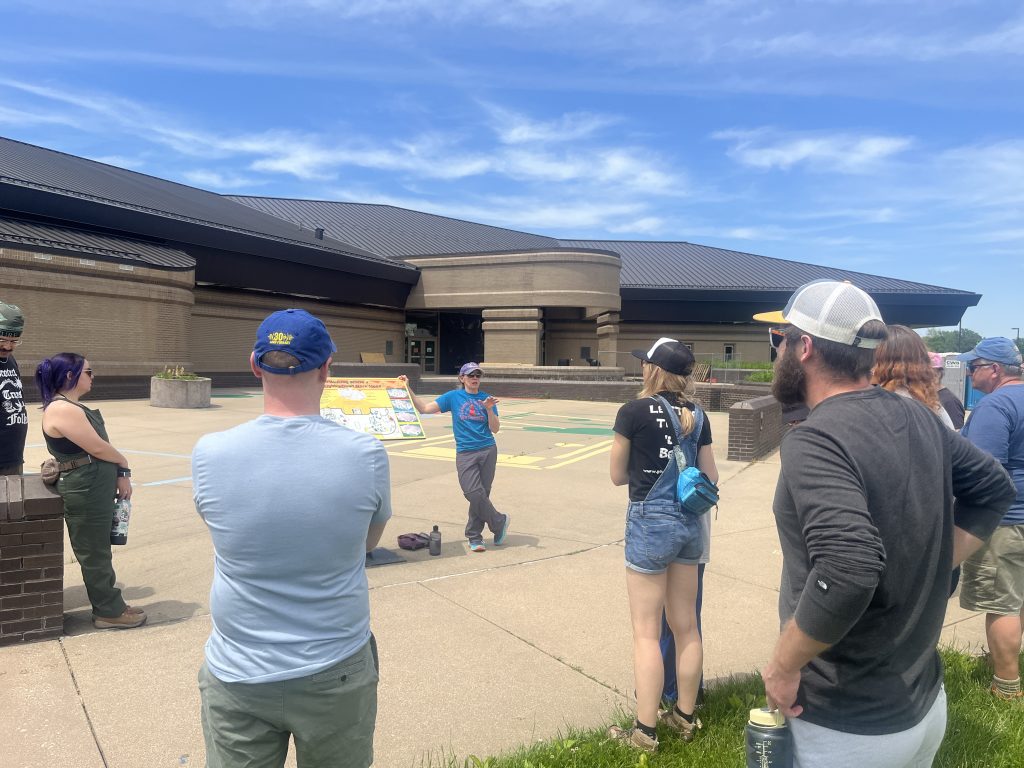
- Indigenous Culture and History of Cahokia Hike and Discussion with Dr. Zimmerman from SIUE – May 2025
- Restorative Circle Training – Summer 2025
- Remember the Removal Walk at Trail of Tears Historic Site – Dec 2025
- Environmental Justice & Event Accessibility training for ROG staff – Dec 2025
Trainings and Events for 2024
- Olin Nature Preserve Hike to Underground Railroad Monument – May 10th
- Queer Writes event at the Missouri History Museum – June 27th
- Queer Climate Stories Documentary Screening – Summer 2024
- Ferguson Rises Screening – August 6th
- Mary Meachum Freedom Crossing Celebration on the Mississippi Greenway – October 19th
Future Training
- Our DEIB Committee meets monthly to plan trainings and events throughout the year that support our overall commitment to Diversity, Equity, Inclusion, and Belonging through partnerships and engaging with community events.
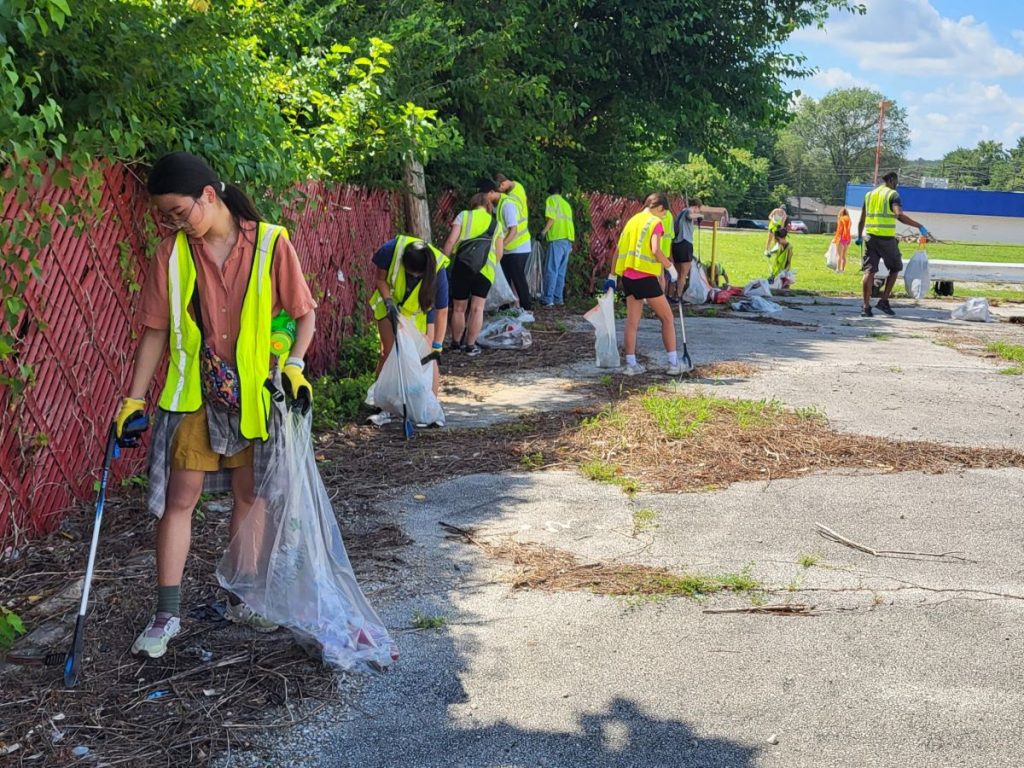
Through our Environmental Justice Days of Action, we support community organizations and neighborhood associations in hosting clean ups and garden days by providing volunteer outreach and recruitment, equipment, and an honorarium in neighborhoods and parks impacted by illegal dumping and food apartheid.
- Co-write grants with organizations to help pass funding directly to them to reach their Environmental Justice work goals.
- Support organizations with Letters of Support in their own grant applications.
- Lend out tools/equipment for groups to have their own clean ups.
- Past Partners
-
- A Red Circle
- Clean City Coalition East St. Louis
- Columbia Elementary School
- Cure Violence (Wells-Goodfellow)
- Dutchtown South Community Corporation
- East St. Louis City
- Empire13
- Employment Connection
- Ferguson Eco Team
- Glasgow Village Homeowners Association
- Gravois Park Neighborhood Association
- Marine Villa Neighborhood Association
- Metropolitan Congregations United
- New Roots Urban Farm
- North Newstead Association
- Ujima & George Washington Carver Farms
- Wells-Goodfellow Improvement Association
- Wellston Loop Community Development Corp.
- Young Voices With Action
For our Recycling on the Go program, we offer subsidized services for non-profits, and BIPOC led community organizations. Our ROG staff also receive training on Environmental Justice and Event Accessibility as well as their full participation in organizational wide trainings and events to better equip them for their work with communities at ROG events.
At the annual Earth Day Festival, we work to ensure infrastructure is accessible for attendees and vendors with disabilities.
We work with local BIPOC vendors to increase representation and showcase an authentically diverse sustainability movement and recruit sponsorships to offer reduced vendor rates when possible. We also pay an annual Voluntary Land Tax to Indigenous Nations or Organizations in recognition of holding the Earth Day Festival on Indigenous land.
Accessibility Consultation with Starkloff Disability Institute:
-
-
- Festival layout and amenities assessment to improve accessibility including adding a ramp for our main stage
- Added a Sensory Tent & Nursing Tent for attendees
- Website updates to provide details on accessibility at the Festival
- ASL interpretation for Festival speeches by a Deaf-led interpreting service
- Accessibility Guide for Allies included in vendor meeting materials
- Event Accessibility Checklist used to inform Festival planning
-
The Green Dining Alliance works with our 100+ member restaurants to include social sustainability in our audit metrics to become a GDA certified business. The audit looks at not only what products a business uses and how well they treat the planet, but also how well they treat their staff. We encourage restaurants to provide benefits and more accessible transit options to staff whenever able.
Accomplishments from some of our GDA Restaurants
- Safe Bar training to ensure patrons are taken care of in difficult situations. (The Royale and others)
- Provided free meals to volunteers & affected community members after the May 2025 Tornado (At least 20 GDA members participated)
- In addition to year round food donations to prevent waste, many served as food drive drop offs during the 2025 Government shutdown which ended SNAP benefits for food insecure community members. (Nearly 30% of member restaurants participated)
- Hosted events to benefit staff in need and other nonprofits such as raising funds for LGBTQIA2S+ rights (Sugarwitch) and the Ollie Hinkle Heart Foundation (Olive + Oak)
- Work to prioritize inclusivity through groups like “The Exbeeriance”. Founded by bartender Vivian at GDA member Blue Jay Brewing, which seeks to create a more welcoming atmosphere for POC in the brewing space. Learn More.
The GDA also works to offer discounted certifications for BIPOC-owned restaurants through sponsorships.
- Strategic Plan 2026-2028
- We are in the process of updating our Strategic Plan for the next 3 years which will guide our work. Coming Soon: Read the Strategic Plan.
- DEIB Training and Assessments
-
- Work with expert community leaders for focused annual instruction and tools to identify and continue to dismantle historic organizational behaviors that could be complicit to bias or rooted in racism.
- Earth Day Festival Annual Report
-
- By far our largest and most impactful event each year – results gathered for reporting are a crucial guide for determining whether we meet goals to honor and involve People of Color led organizations and individuals, giving them an engaged audience to showcase their unique regional environmental efforts. Attendee survey highlights help us to see diversity of race/ethnicity, age, household income, and zip codes are represented. Learn more.
- Wrap Up Meeting with EJDA Partners
- Reviewing our events and programs with Environmental Justice partners to gauge the impact and work to improve our processes to support self-determination in marginalized communities. We seek to follow the leadership of experienced community experts and support their work in ways that align with our mission.
Environmental Justice Day of Action
Have a suggestion for a training or a suggested partnership to support this work? Contact us at info@earthday-365.org with the subject line: “DEIB Committee”
Our Impact and Aspirations
- Integration into our Strategic Plan
Our current Strategic Plan runs through 2025. We are dedicating stakeholder time to thoughtfully and intentionally plan for a future where earthday365 further dismantles bias, racism, and inequity. Learn more. 2026 coming soon! - Advance community-identified environmental justice goals with a focus on our staff and institutional expertise in illegal dumping and food justice.
- Build relationships with community organizations already leading in environmental justice areas and offer support when asked (volunteers, dumpsters, food, restroom facilities, etc). – Environmental Justice Days of Action program.
- Use our platform to amplify community activists and Black-led environmental groups working in environmental justice.
- Seek collaborative funding that actively and directly supports Black-led sustainability-related initiatives.
- Convene conversations to build towards regional policy changes.
- Restorative Justice Circle
2026 aims to bring forth a new group fueled by years of internal planning to provide a trained focused group of interested staff, board, and Young Friends volunteering to learn methods of restorative justice training to assist with moderating stressors that can arise during conflict. We are very excited for this work.
A just environment in St. Louis means healing our connection to the land and each other. It smells like clean air and tastes like unpolluted water and locally grown food. It means accessible green spaces where the environment is not only included in our infrastructure but celebrated. It means safe, energy-efficient housing for everyone and a food system that is rooted in sustainable agriculture and the communities it sustains. It looks like connected, well-resourced communities leading the discussions on environmental decision-making, and ensuring policies prioritize their health, safety, and sustainability. Environmental Justice in St. Louis is about creating a healthier, more equitable future for everyone and righting the wrongs of the past.